
Anúncios
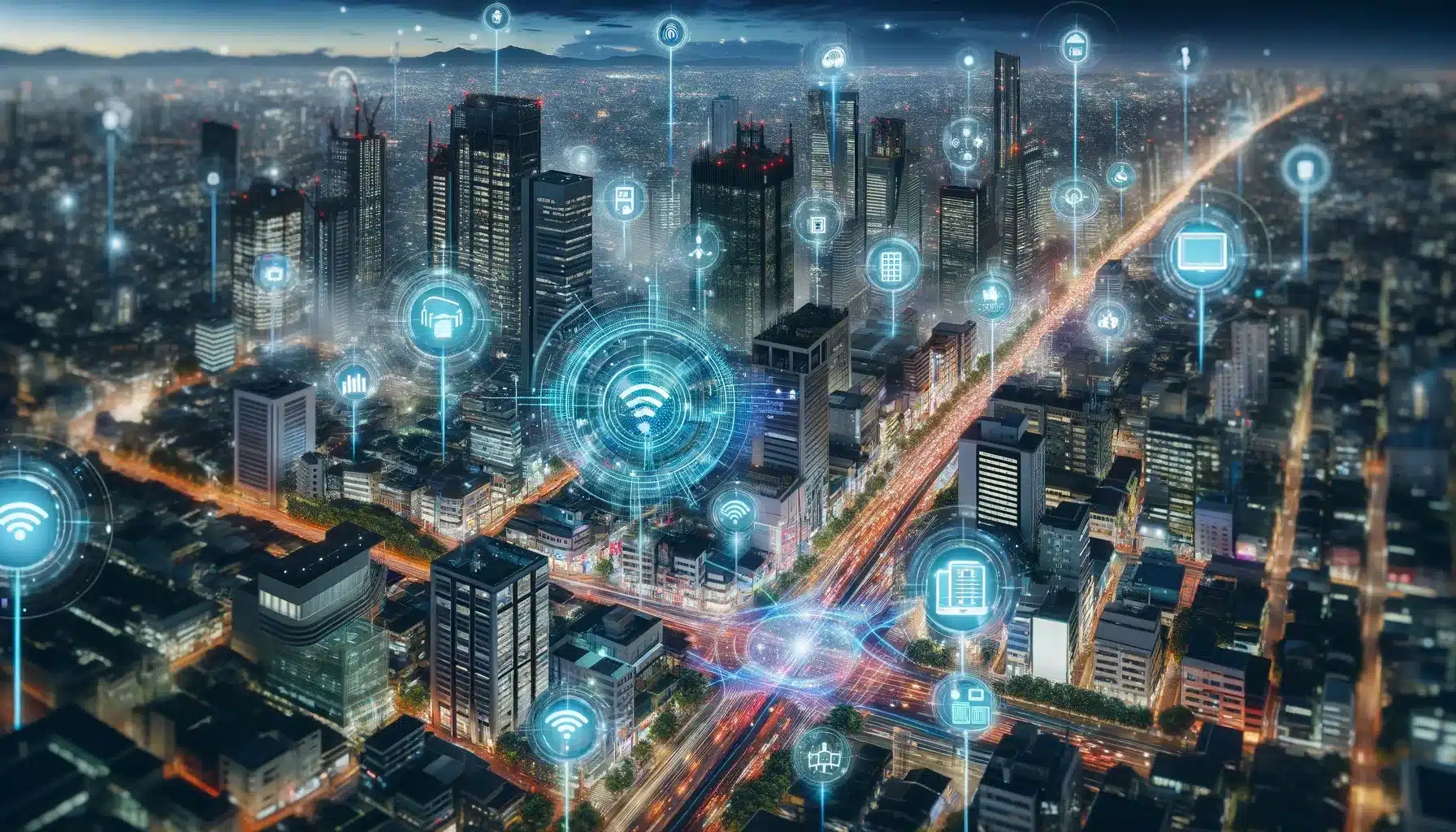
Smart cities are transforming urban landscapes by leveraging cutting-edge technology, data analytics, and collaborative ecosystems to become powerful platforms for innovation and sustainable development.
🌆 The Evolution of Urban Spaces into Innovation Hubs
The concept of smart cities has evolved dramatically over the past decade. What began as simple digitization initiatives has transformed into comprehensive innovation platforms that fundamentally reshape how urban environments function, grow, and serve their inhabitants. These metropolitan areas are no longer just places where people live and work—they’ve become living laboratories where technology, governance, and community collaboration converge to solve complex challenges.
Anúncios
Traditional cities were built around physical infrastructure: roads, buildings, and public spaces. Today’s smart cities add layers of digital infrastructure that collect data, enable communication, and facilitate real-time decision-making. This digital overlay creates unprecedented opportunities for innovation, allowing cities to test new solutions, iterate quickly, and scale successful initiatives across different neighborhoods and districts.
The transformation isn’t just about technology implementation. Smart cities represent a fundamental shift in urban governance philosophy, moving from top-down planning to participatory, data-driven approaches that involve citizens, businesses, researchers, and civic organizations in co-creating solutions for urban challenges.
Anúncios
Building Blocks of Smart City Innovation Platforms
Smart cities function as innovation platforms by integrating several key components that work together to create an ecosystem conducive to experimentation and breakthrough solutions. Understanding these building blocks helps clarify how cities unlock their innovative potential.
Infrastructure as a Foundation for Experimentation
The physical and digital infrastructure of smart cities provides the essential foundation for innovation. High-speed broadband networks, IoT sensor arrays, and cloud computing capabilities create the technological backbone that supports data collection, analysis, and application development. This infrastructure allows entrepreneurs, researchers, and civic innovators to build solutions without needing to invest heavily in basic technological capabilities.
Cities like Barcelona have invested extensively in public Wi-Fi networks, sensor installations, and open data platforms that anyone can access and utilize. This democratization of infrastructure lowers barriers to entry for innovators and enables rapid prototyping of solutions addressing urban challenges ranging from traffic congestion to energy efficiency.
Data: The Currency of Urban Innovation
Data represents the lifeblood of smart city innovation platforms. Modern urban environments generate massive quantities of information from transportation systems, utility networks, public services, and citizen interactions. When this data is properly collected, anonymized, and made accessible, it becomes a powerful resource for innovation.
Open data initiatives have proven particularly transformative. Cities that publish datasets on everything from air quality to parking availability enable third-party developers to create applications and services that address genuine citizen needs. This approach has spawned entire ecosystems of civic technology startups and community-driven solutions that traditional government processes might never have conceived.
Regulatory Sandboxes and Flexible Governance
Innovation thrives when cities create regulatory environments that balance safety and accountability with flexibility for experimentation. Progressive smart cities have established regulatory sandboxes—controlled environments where new technologies and business models can be tested with temporary exemptions from certain regulations.
These sandboxes allow autonomous vehicles, drone delivery services, and other emerging technologies to be piloted in real-world conditions while regulatory frameworks catch up with technological possibilities. This approach positions cities as partners in innovation rather than obstacles, accelerating the path from concept to implementation.
🚀 Real-World Examples of Smart Cities Driving Innovation
Examining concrete examples illuminates how smart cities function as innovation platforms and the tangible benefits they deliver to residents, businesses, and society at large.
Singapore: The Laboratory Nation
Singapore has positioned itself as perhaps the world’s most comprehensive smart city innovation platform. The city-state’s Virtual Singapore project creates a dynamic 3D city model that serves as a testing ground for solutions before physical implementation. Urban planners, researchers, and businesses can simulate everything from crowd flow during emergencies to the impact of new building developments on wind patterns and sunlight.
The government’s Smart Nation initiative actively collaborates with technology companies, startups, and research institutions to pilot solutions across transportation, healthcare, urban planning, and public services. This collaborative approach has produced innovations like predictive maintenance for public housing, AI-powered elderly care monitoring, and intelligent traffic management systems that have reduced congestion significantly.
Amsterdam: Citizen-Centered Innovation
Amsterdam exemplifies how smart cities can harness citizen participation as a driver of innovation. The Amsterdam Smart City platform brings together residents, businesses, knowledge institutions, and government in collaborative projects addressing urban challenges. With over 3,000 participants and hundreds of projects, the platform demonstrates the power of crowdsourced innovation.
Projects range from smart charging infrastructure for electric vehicles to circular economy initiatives that reduce waste. What distinguishes Amsterdam’s approach is the emphasis on bottom-up innovation where citizens don’t just consume smart city services but actively participate in their design and implementation.
Barcelona: Digital Democracy and Urban Innovation
Barcelona has pioneered the integration of digital democracy tools with smart city infrastructure, creating unique opportunities for participatory innovation. The city’s Decidim platform allows citizens to propose projects, debate urban policies, and vote on budget allocations, directly shaping how innovation resources are deployed.
This democratic approach to innovation has produced diverse solutions including superblocks that redesign neighborhoods to prioritize pedestrians over vehicles, a city-wide sensor network managed as a common good rather than privatized infrastructure, and renewable energy cooperatives that give residents ownership of sustainable energy solutions.
💡 Technology Enablers Powering Smart City Innovation
Several technological trends are accelerating the effectiveness of smart cities as innovation platforms, creating new possibilities for urban problem-solving.
Artificial Intelligence and Machine Learning
AI and machine learning algorithms process the vast data streams generated by smart city infrastructure, identifying patterns, predicting problems before they occur, and optimizing resource allocation in real-time. These technologies enable predictive maintenance of infrastructure, intelligent energy grid management, and personalized public services that adapt to individual citizen needs.
Machine learning models can predict traffic congestion hours in advance, allowing dynamic adjustment of signal timing and public transit schedules. They can forecast energy demand spikes, enabling utilities to balance loads and integrate renewable sources more effectively. These capabilities transform cities from reactive to proactive in addressing challenges.
Internet of Things and Sensor Networks
The proliferation of IoT devices and sensor networks provides the sensory capabilities that make cities truly “smart.” Environmental sensors monitor air and water quality, smart meters track energy consumption, and connected infrastructure from streetlights to waste bins communicates status and needs in real-time.
This sensing capability creates feedback loops that drive continuous improvement. When cities can measure the impact of interventions—whether traffic calming measures, green space improvements, or public health initiatives—they can iterate rapidly, scaling what works and abandoning what doesn’t.
Blockchain and Distributed Ledger Technologies
Blockchain technologies are finding innovative applications in smart cities, particularly in creating transparent, secure systems for transactions, identity management, and resource sharing. From tracking the provenance of goods in circular economy initiatives to enabling peer-to-peer energy trading between buildings with solar panels, blockchain creates trust and transparency in complex urban systems.
Some cities are exploring blockchain-based digital identity systems that give citizens control over their personal data while still enabling access to personalized government services. This approach addresses privacy concerns while maintaining the benefits of data-driven public services.
🌱 Sustainability Innovation Through Smart City Platforms
Perhaps nowhere is the innovation platform role of smart cities more evident than in sustainability initiatives. The urgency of climate change has made cities crucial laboratories for developing and scaling solutions that reduce environmental impact while improving quality of life.
Energy System Transformation
Smart cities are pioneering the transition to renewable energy through intelligent grid management, distributed generation, and demand response systems. Innovation platforms enable experimentation with vehicle-to-grid technologies where electric cars serve as mobile energy storage, building-integrated solar generation, and district heating systems that capture waste heat from industrial processes.
These energy innovations require coordination across multiple stakeholders—utilities, building owners, technology providers, and residents. Smart city platforms facilitate this coordination through shared data standards, open APIs, and governance structures that align incentives.
Circular Economy and Waste Innovation
Smart cities are reimagining waste from a disposal problem to a resource opportunity through circular economy approaches. Sensor-equipped waste management systems optimize collection routes, reducing fuel consumption and emissions. Digital platforms connect businesses to share resources and byproducts, creating industrial symbiosis where one company’s waste becomes another’s input.
Food waste initiatives use apps and digital platforms to connect restaurants, grocery stores, and food banks, ensuring edible food reaches people rather than landfills. These innovations demonstrate how smart city platforms can address environmental and social challenges simultaneously.
🤝 Collaboration Models Driving Urban Innovation
The most successful smart city innovation platforms recognize that breakthrough solutions emerge from collaboration across sectors and disciplines. Various partnership models have proven effective in catalyzing innovation.
Public-Private Innovation Partnerships
Partnerships between city governments and private companies leverage the resources, expertise, and risk tolerance of both sectors. Cities provide access to infrastructure, data, and real-world testing environments. Companies contribute technological capabilities, investment capital, and operational expertise.
Effective partnerships maintain clear governance structures that protect public interest while providing companies sufficient commercial opportunity to justify their investment. The best arrangements include knowledge-sharing provisions that ensure innovations can be adapted and scaled to other cities.
Living Labs and Urban Experimentation
Living labs create designated districts or neighborhoods where new technologies and approaches can be tested in real-world conditions with community participation. These controlled environments provide valuable learning while managing risks associated with unproven solutions.
Residents in living lab areas often receive benefits—whether reduced utility costs, improved services, or financial compensation—in exchange for participating in experiments and providing feedback. This arrangement creates a sustainable model for continuous urban innovation while respecting citizen agency and privacy.
University-City Research Collaborations
Universities bring research capabilities, student talent, and long-term thinking to smart city innovation. Many cities have formalized partnerships with local universities, creating joint research initiatives that address urban challenges while providing students with real-world learning opportunities.
These collaborations often focus on challenges requiring deep technical expertise—from modeling urban microclimates to developing new materials for sustainable construction. The academic partnership adds rigor and independent evaluation to innovation initiatives while building local capacity for ongoing urban innovation.
🔐 Addressing Challenges in Smart City Innovation
While smart cities offer tremendous innovation potential, they also face significant challenges that must be addressed to ensure equitable, sustainable, and trustworthy development.
Privacy and Data Governance
The extensive data collection that powers smart city innovation raises legitimate privacy concerns. Citizens worry about surveillance, data breaches, and how their information might be used or monetized. Successful smart cities address these concerns through transparent data governance frameworks that clearly define what data is collected, how it’s used, who has access, and how long it’s retained.
Privacy-preserving technologies like differential privacy, federated learning, and edge computing allow cities to gain insights from data without compromising individual privacy. Strong legal frameworks with meaningful consent mechanisms and data rights ensure citizens maintain control over their personal information.
Digital Divide and Inclusive Innovation
Smart city innovations risk exacerbating inequality if benefits accrue primarily to wealthy, digitally connected populations. Addressing the digital divide requires intentional efforts to ensure universal access to connectivity, digital literacy programs, and innovation processes that actively include marginalized communities.
Inclusive innovation means designing solutions that work for all residents, including elderly citizens less comfortable with technology, low-income populations without smartphones, and people with disabilities requiring accessible interfaces. The best smart city platforms incorporate universal design principles and actively seek input from diverse community members.
Cybersecurity and System Resilience
The interconnected nature of smart city infrastructure creates potential vulnerabilities. Cyberattacks targeting city systems could disrupt essential services, compromise sensitive data, or even threaten public safety. Robust cybersecurity measures, redundant systems, and incident response capabilities are essential components of responsible smart city development.
Building resilience also means avoiding over-dependence on technology. Smart cities should maintain capabilities to operate critical services even when digital systems fail, ensuring technology enhances rather than replaces human capacity and judgment.
🎯 The Future Trajectory of Smart City Innovation Platforms
As technology continues evolving and urban challenges grow more complex, smart cities as innovation platforms will become increasingly sophisticated and impactful. Several trends point toward the future direction of urban innovation.
Hyperlocal and Neighborhood-Scale Innovation
While many smart city initiatives focus on city-wide systems, future innovation will increasingly operate at neighborhood and block levels. Hyperlocal approaches recognize that different districts face distinct challenges and possess unique assets. Neighborhood-scale platforms will enable residents to develop solutions specifically tailored to their community’s needs.
This localization of innovation empowers communities, builds social capital, and creates more culturally appropriate solutions. Digital tools that facilitate neighborhood organizing, resource sharing, and collective action will become increasingly important components of smart city platforms.
Cross-City Knowledge Networks
As more cities develop as innovation platforms, networks connecting urban innovators across geographies will accelerate learning and adaptation. What works in Barcelona can inform experiments in Buenos Aires. Singapore’s successes can be adapted to suit conditions in Stockholm.
These knowledge networks—both formal partnerships between cities and informal communities of practice—will reduce duplication, accelerate implementation timelines, and help cities avoid repeating each other’s mistakes. Standardized frameworks for documenting and sharing urban innovations will become increasingly valuable.
Integration of Climate Adaptation and Mitigation
Future smart city innovation will necessarily center climate resilience and carbon reduction. As extreme weather events become more frequent and pressure to decarbonize intensifies, innovation platforms will prioritize solutions that simultaneously address multiple sustainability challenges.
Nature-based solutions that integrate green infrastructure with digital monitoring, climate-responsive building systems that optimize for both energy efficiency and occupant comfort, and mobility innovations that make low-carbon transportation more convenient than driving will define the next generation of urban innovation.

🌟 Transforming Urban Possibilities Through Innovation
Smart cities represent more than technological advancement—they embody a fundamental reimagining of urban possibilities. By functioning as innovation platforms, these cities create ecosystems where diverse actors collaborate to solve complex challenges, experiment with new approaches, and rapidly scale successful solutions.
The transformation from traditional cities to smart innovation platforms requires deliberate choices about governance, investment, and values. Cities that succeed in this transition prioritize inclusivity, transparency, and sustainability alongside technological sophistication. They recognize that the smartest cities are those that enhance human capabilities, strengthen community connections, and improve quality of life for all residents.
As urbanization continues and more of humanity lives in cities, the innovation platform model offers hope that our urban environments can meet 21st-century challenges. Through creative application of technology, collaborative governance, and citizen engagement, smart cities are demonstrating that our most complex problems can become opportunities for breakthrough innovation.
The revolution is already underway in cities around the world. The question isn’t whether smart cities will transform innovation—it’s how quickly these models will spread and how effectively they’ll address the urgent challenges facing urban populations globally. For innovators, policymakers, and citizens alike, engaging with smart cities as platforms for collaboration and experimentation represents one of the most promising pathways toward sustainable, equitable, and vibrant urban futures.
