
Anúncios
Innovation knows no borders, yet its impact on global progress depends on how nations cooperate, compete, and create policies that foster cross-border collaboration and technological advancement.
🌍 The New Era of Global Innovation Ecosystems
We live in an interconnected world where breakthrough innovations rarely emerge in isolation. From artificial intelligence to renewable energy, the most transformative technologies today result from international collaboration, shared knowledge, and diplomatic frameworks that enable scientists, entrepreneurs, and policymakers to work together across geographical boundaries.
Anúncios
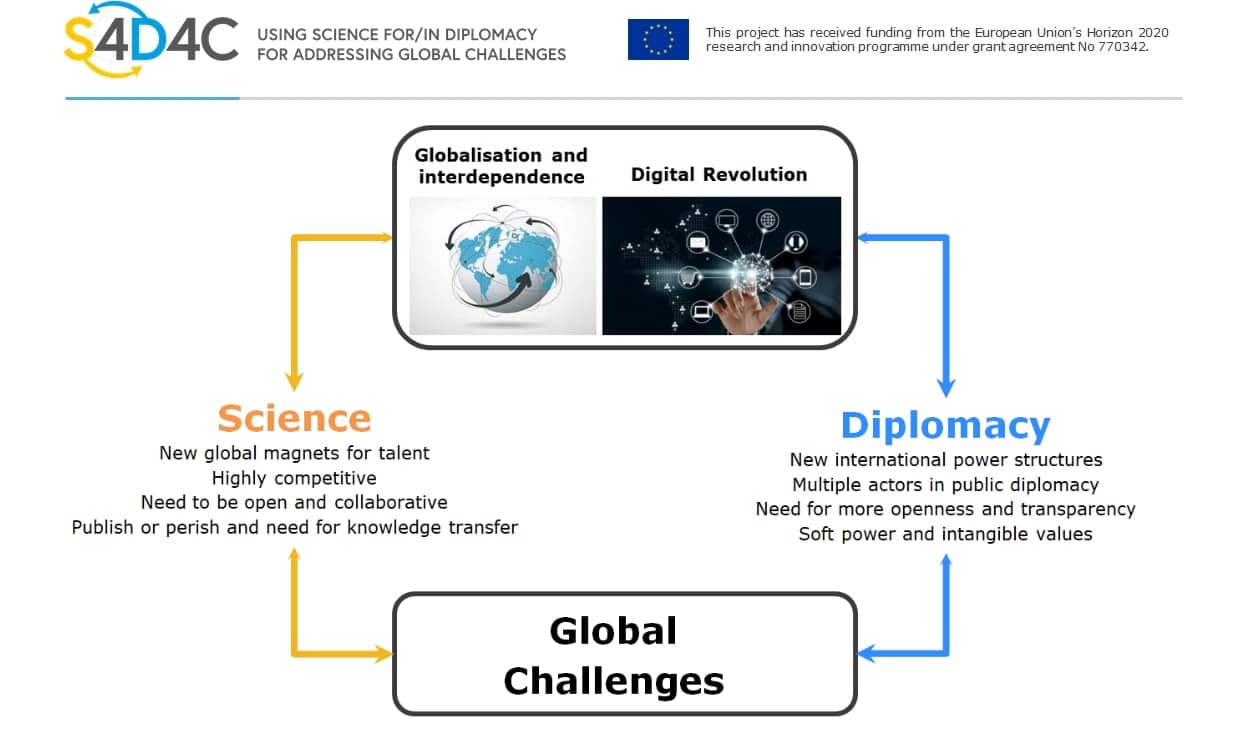
Innovation policy has evolved from a purely domestic concern to a central pillar of international relations. Countries now recognize that their competitive advantage depends not only on internal research and development capabilities but also on their ability to attract global talent, participate in international research networks, and negotiate favorable terms for technology transfer and intellectual property protection.
This paradigm shift has transformed innovation diplomacy into a critical instrument of soft power. Nations deploy science attachés, establish bilateral research agreements, and participate in multilateral innovation initiatives as strategic tools to advance both economic and geopolitical interests. The intersection of innovation policy and diplomacy has become a defining feature of 21st-century statecraft.
Anúncios
🔬 Building Bridges Through Science and Technology Cooperation
International science and technology cooperation represents one of the most successful forms of cross-border collaboration. Through bilateral and multilateral agreements, countries pool resources to tackle challenges that transcend national boundaries—from pandemic preparedness to climate change mitigation.
The European Union’s Horizon Europe program exemplifies how regional innovation policy can drive collective progress. With a budget exceeding €95 billion for 2021-2027, it funds collaborative research projects involving partners from multiple member states and associated countries. This approach not only accelerates scientific discovery but also strengthens diplomatic ties through shared objectives and mutual dependencies.
Similarly, initiatives like the International Space Station demonstrate how even geopolitical rivals can collaborate when innovation policy aligns with broader diplomatic goals. Despite tensions between the United States and Russia, their partnership in space exploration has persisted for decades, showcasing how scientific cooperation can serve as a stabilizing force in international relations.
The Role of Innovation Attachés in Modern Diplomacy
Many countries now deploy innovation and science attachés to their embassies and consulates worldwide. These specialized diplomats serve as bridges between national innovation ecosystems, identifying partnership opportunities, facilitating technology transfers, and promoting their countries as attractive destinations for international research collaboration and investment.
Israel’s success in building a thriving startup ecosystem owes much to its network of economic and innovation attachés who actively promote Israeli technology globally while scouting international opportunities for domestic companies. This strategic approach to innovation diplomacy has helped a small nation become a global technology powerhouse.
💡 Innovation Policy as a Competitive Instrument
While cooperation drives much cross-border innovation, competition remains a powerful motivator. Countries increasingly view innovation policy through a strategic lens, designing frameworks that provide competitive advantages while protecting national interests.
The United States CHIPS and Science Act represents a significant shift toward using innovation policy as a tool for economic security and geopolitical positioning. By investing $280 billion in domestic semiconductor manufacturing and research, the legislation aims to reduce dependence on foreign suppliers while maintaining technological leadership in critical sectors.
China’s Made in China 2025 initiative similarly demonstrates how innovation policy can serve strategic national objectives. By targeting specific high-tech sectors for development—including robotics, aerospace, and biotechnology—China has signaled its ambition to transition from manufacturing hub to innovation leader, reshaping global technology supply chains in the process.
Balancing Openness with Security Concerns
The tension between open innovation and national security has intensified in recent years. Countries struggle to maintain the benefits of international collaboration while protecting sensitive technologies and intellectual property from potential adversaries.
Export controls, foreign investment screening mechanisms, and research security protocols have become standard tools in the innovation policy toolkit. The challenge lies in designing these measures to address legitimate security concerns without stifling the international collaboration that drives scientific progress and technological innovation.
🤝 Multilateral Frameworks Shaping Global Innovation
International organizations and multilateral agreements provide the institutional architecture for cross-border innovation cooperation. These frameworks establish common standards, facilitate knowledge sharing, and create mechanisms for addressing disputes related to intellectual property and technology transfer.
The World Trade Organization’s Agreement on Trade-Related Aspects of Intellectual Property Rights (TRIPS) represents a foundational framework for global innovation policy. By establishing minimum standards for intellectual property protection, TRIPS aims to balance incentives for innovation with access to knowledge and technology, though debates about this balance continue, particularly regarding access to medicines and green technologies.
The World Intellectual Property Organization plays a complementary role by administering international treaties on patents, trademarks, and copyrights while providing technical assistance to developing countries seeking to strengthen their innovation ecosystems. These multilateral institutions serve as forums where innovation policy and diplomacy converge, shaping the rules that govern global technology flows.
Regional Innovation Blocs and Their Global Impact
Regional integration initiatives increasingly incorporate innovation policy as a core component. The African Continental Free Trade Area, for instance, includes provisions for harmonizing intellectual property regimes and promoting technology transfer within the continent, recognizing that economic integration requires innovation policy coordination.
The Association of Southeast Asian Nations has similarly prioritized innovation cooperation through initiatives like the ASEAN Plan of Action on Science, Technology and Innovation, which aims to leverage collective resources to address regional challenges while enhancing global competitiveness.
🌱 Innovation Diplomacy for Sustainable Development
The Sustainable Development Goals have created new imperatives for innovation policy and diplomacy. Addressing challenges like climate change, food security, and healthcare access requires not only technological breakthroughs but also diplomatic frameworks that ensure equitable access to innovations and facilitate their adaptation to diverse contexts.
The COVID-19 pandemic highlighted both the potential and limitations of global innovation cooperation. While vaccines were developed at unprecedented speed through international collaboration, debates over intellectual property rights and equitable distribution revealed tensions between innovation incentives and global public health needs.
The COVAX initiative represented an attempt to use innovation diplomacy to address these tensions, creating a multilateral mechanism for vaccine procurement and distribution. Despite implementation challenges, it demonstrated how innovation policy and diplomacy can be deployed to tackle global crises through coordinated international action.
Green Technology Transfer and Climate Diplomacy
Climate change has elevated innovation policy to the center of environmental diplomacy. The Paris Agreement explicitly recognizes technology development and transfer as critical to achieving climate goals, establishing a Technology Mechanism to support developing countries in accessing clean energy innovations.
Countries with advanced renewable energy sectors leverage their technological capabilities as diplomatic assets, offering technology partnerships and capacity building as components of climate cooperation. This approach aligns national innovation policy objectives with broader diplomatic goals while contributing to global climate action.
📊 Measuring Success in Cross-Border Innovation
Assessing the effectiveness of innovation policy and diplomacy requires sophisticated metrics that capture both quantitative outputs and qualitative outcomes. Traditional indicators like patent filings and research publications provide incomplete pictures of cross-border innovation dynamics.
More comprehensive approaches examine international co-authorship networks, cross-border venture capital flows, and the formation of global innovation clusters that span multiple jurisdictions. These metrics reveal how innovation policy and diplomacy shape the geography of innovation, influencing where breakthrough discoveries occur and how their benefits are distributed.
The Global Innovation Index provides a comparative framework for assessing national innovation performance, including indicators related to international collaboration and knowledge absorption. Countries increasingly use such benchmarks to evaluate their innovation diplomacy strategies and identify areas for policy improvement.
🚀 Emerging Frontiers in Innovation Diplomacy
New technological domains present fresh challenges and opportunities for innovation policy and diplomacy. Artificial intelligence, quantum computing, and biotechnology raise questions about governance frameworks, ethical standards, and the distribution of benefits and risks across borders.
The race to establish international norms for artificial intelligence illustrates how innovation diplomacy operates in emerging technology domains. Countries and regional blocs are competing to shape global AI governance, with the European Union’s AI Act, China’s AI regulations, and various U.S. initiatives representing different approaches to balancing innovation promotion with risk management.
Space: The Ultimate Frontier for Innovation Cooperation
Space exploration and commercialization exemplify how innovation policy and diplomacy evolve to address new domains. The Artemis Accords represent a modern approach to space governance, establishing principles for international cooperation in lunar exploration while leaving room for commercial activities.
As more countries develop space capabilities and private companies enter the sector, the intersection of innovation policy and space diplomacy will become increasingly complex. Questions about resource extraction, orbital debris management, and equitable access to space-based services will require diplomatic solutions grounded in shared innovation objectives.
🎯 Strategic Recommendations for Policymakers
Effective innovation diplomacy requires coherent strategies that align domestic innovation policy with international engagement. Policymakers should consider several key principles when designing these strategies:
- Foster reciprocity: Build international partnerships based on mutual benefit rather than zero-sum competition, recognizing that innovation often generates positive spillovers that can benefit all participants.
- Invest in connectivity: Develop infrastructure—both physical and institutional—that facilitates international collaboration, including funding for researcher exchanges, joint laboratories, and collaborative platforms.
- Balance openness and security: Implement research security measures that protect legitimate interests without creating barriers to beneficial international cooperation.
- Prioritize inclusivity: Design innovation diplomacy initiatives that engage developing countries as partners rather than recipients, recognizing that diverse perspectives enhance innovation outcomes.
- Align policies across government: Ensure coordination between foreign affairs, science and technology, trade, and defense agencies to create coherent innovation diplomacy strategies.
🔮 The Future Landscape of Global Innovation
The coming decades will likely see intensifying competition alongside deepening interdependence in global innovation ecosystems. Countries will continue pursuing national competitive advantages while recognizing that many challenges require collective action and shared solutions.
Innovation policy and diplomacy will increasingly need to address questions of equity and inclusion. As technological capabilities concentrate in certain regions and institutions, diplomatic efforts will focus on ensuring that innovation benefits are distributed broadly and that diverse voices shape the technologies that will define our collective future.
The digital transformation of innovation processes themselves will create new opportunities and challenges for cross-border cooperation. Virtual collaboration platforms, open-source development models, and distributed research networks will reshape how innovation occurs across borders, requiring policy and diplomatic frameworks to adapt accordingly.

🌟 Building Tomorrow’s Innovation Bridges Today
The relationship between innovation policy and diplomacy will continue evolving as new technologies emerge and global challenges intensify. Success will require moving beyond viewing innovation primarily through national competitiveness lenses to recognizing it as a global public good that demands collective stewardship.
Countries that excel in innovation diplomacy will be those that cultivate diverse international partnerships, invest in the connective tissue that enables cross-border collaboration, and contribute to multilateral frameworks that govern global innovation ecosystems. They will balance legitimate national interests with recognition that many of humanity’s greatest challenges and opportunities transcend borders.
As we navigate an increasingly complex and interconnected world, the synergy between innovation policy and diplomacy will prove essential to global progress. By building bridges instead of walls, fostering cooperation alongside competition, and ensuring that innovation serves broad human flourishing, we can harness the transformative power of cross-border innovation to address our shared challenges and create a more prosperous, sustainable, and equitable future for all.
The path forward requires sustained commitment from policymakers, researchers, entrepreneurs, and civil society to strengthen the diplomatic and institutional foundations that enable innovation to flow across borders while ensuring that its benefits are widely shared. In doing so, we honor the fundamentally collaborative nature of human progress while equipping ourselves to tackle the defining challenges of our time.
