Anúncios
The digital revolution has transformed how we create, consume, and experience art, blurring boundaries between traditional mediums and innovative technologies in unprecedented ways.
🎨 The New Canvas: Where Technology Meets Artistic Expression
We stand at a remarkable crossroads in human creativity. The convergence of multiple media platforms has fundamentally altered the landscape of artistic production, distribution, and reception. What was once confined to galleries, concert halls, and theaters now flows seamlessly across screens, spaces, and sensory experiences. This transformation isn’t merely about new tools—it represents a profound shift in how we conceive, create, and engage with art itself.
Anúncios
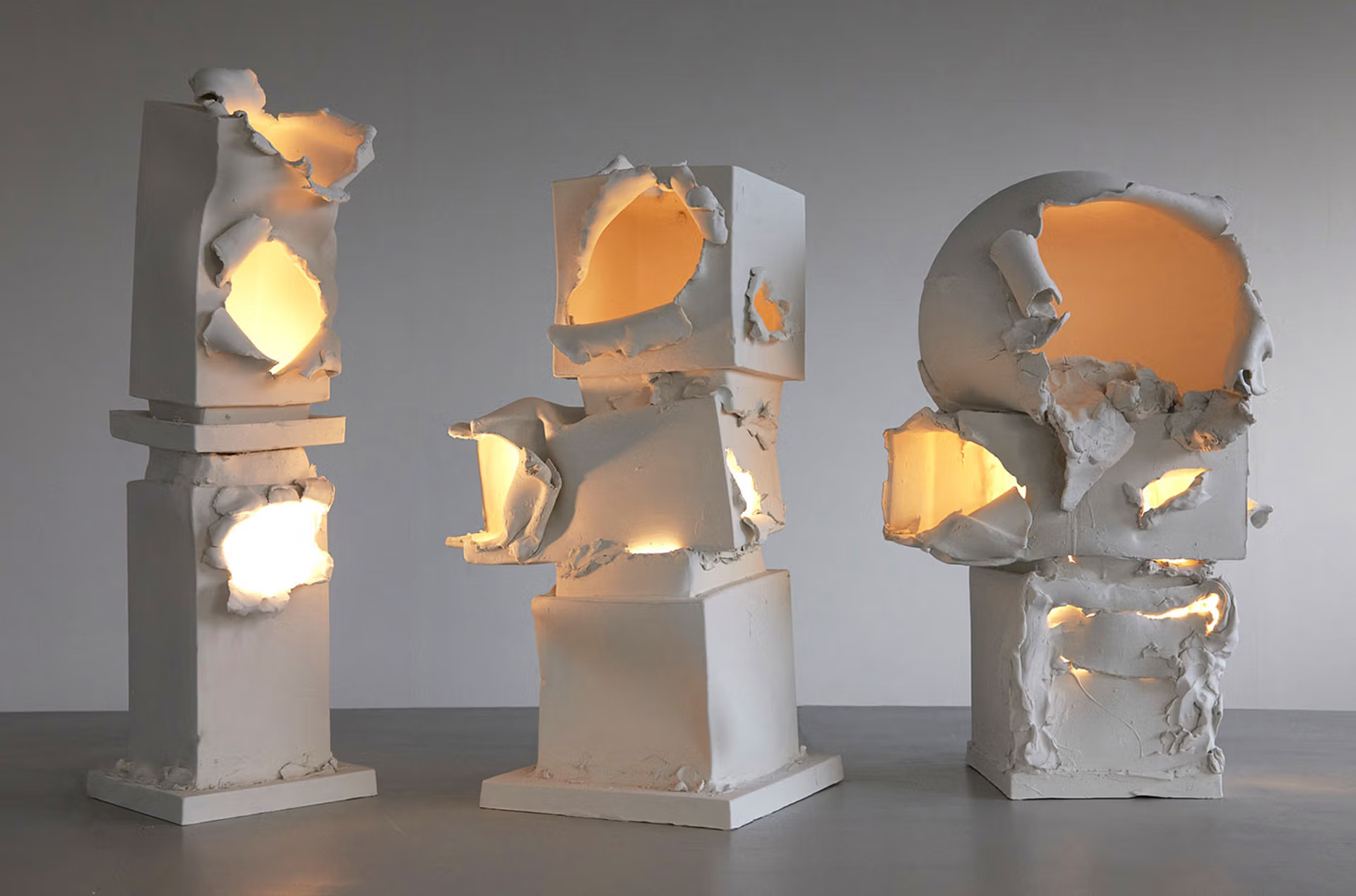
Hybrid art emerges from this convergence as a dynamic form that refuses to be categorized within traditional boundaries. It combines digital and analog, virtual and physical, interactive and passive elements into cohesive experiences that challenge our understanding of what art can be. Artists today work with code as readily as with paint, sculpture incorporates projection mapping, and performances exist simultaneously in physical venues and digital streams.
Understanding Media Convergence in the Creative Sphere
Media convergence describes the merging of previously distinct communication technologies, platforms, and industries into integrated digital systems. In the context of art, this phenomenon has created unprecedented opportunities for creative expression. Artists no longer need to choose a single medium—they can orchestrate experiences that span video, sound, interactive elements, physical installations, and online participation.
Anúncios
The implications extend far beyond technical capabilities. Convergence has democratized access to creative tools, enabling artists from diverse backgrounds to experiment with sophisticated technologies that were once accessible only to well-funded institutions. This accessibility has sparked an explosion of innovation, with creators developing entirely new artistic languages that speak to contemporary digital culture.
The Building Blocks of Convergent Media Art
Several key elements characterize the intersection of media convergence and hybrid art. Digital fabrication technologies like 3D printing allow sculptors to realize forms impossible through traditional methods. Virtual and augmented reality create immersive environments that transport audiences into artist-designed worlds. Artificial intelligence generates imagery, music, and text that challenge our notions of authorship and creativity.
Social media platforms function not merely as distribution channels but as collaborative creative spaces where artists engage audiences in participatory works. Live streaming enables performances to reach global audiences while maintaining intimate connections with remote viewers. Blockchain technology introduces new models for art ownership and provenance through NFTs, regardless of ongoing debates about their cultural value.
🌐 Breaking Down Traditional Artistic Boundaries
The most exciting aspect of hybrid art lies in its rejection of artificial divisions between disciplines. A single work might incorporate elements of sculpture, video, performance, coding, and audience interaction. This interdisciplinary approach reflects the complexity of contemporary experience, where we constantly navigate between physical and digital realms.
Consider installations that respond to viewer movements through sensors, altering projected imagery or soundscapes based on audience presence and behavior. These works exist only through participation—they’re incomplete without the collaborative element of viewer engagement. The artwork becomes a system rather than an object, a dynamic process rather than a static creation.
Collaboration Across Disciplines and Geographies
Media convergence has facilitated unprecedented collaboration between artists, technologists, scientists, and communities. Projects that once required proximity can now develop through cloud-based workflows, with contributors scattered across continents. This global collaboration enriches creative work with diverse perspectives and expertise.
Artists partner with programmers to realize interactive visions, collaborate with neuroscientists to create works responsive to brainwave activity, and team with environmental scientists to visualize climate data through aesthetic experiences. These partnerships generate insights and expressions impossible within siloed disciplines, demonstrating how convergence fosters innovation through cross-pollination of ideas.
The Evolution of Creative Processes
The workflow of contemporary hybrid artists differs dramatically from traditional creative processes. Digital sketching, 3D modeling, generative algorithms, and iterative prototyping replace or augment conventional planning methods. Artists think in systems and parameters rather than fixed compositions, designing frameworks within which variations can emerge.
This shift requires new skills and literacies. Many artists now learn programming languages like Processing, Python, or JavaScript alongside traditional techniques. They understand projection mapping software, audio synthesis programs, sensor technologies, and network protocols. This technical knowledge doesn’t diminish artistic vision—it expands the vocabulary available for expression.
Documentation and Preservation Challenges
Hybrid artworks present unique challenges for documentation and preservation. How do you archive an interactive installation that depends on specific technologies that will inevitably become obsolete? How do you preserve a networked performance that involved real-time participation across multiple platforms? Museums and archives grapple with these questions as they work to preserve significant works for future generations.
Some institutions adopt emulation strategies, creating virtual environments that can run obsolete software. Others focus on thorough documentation of the conceptual framework and technical specifications, enabling future reconstruction. These preservation approaches themselves become creative acts, requiring interpretation and decision-making about which elements constitute the essential artwork.
📱 Audience Experience in the Convergent Age
Media convergence has transformed audience relationships with art. Viewers become users, participants, and sometimes co-creators. The passive consumption model gives way to active engagement, where audiences shape their experiences through choices, interactions, and contributions. This participatory dimension fundamentally alters the social dynamics of art appreciation.
Mobile devices serve as portals to augmented layers of meaning within physical spaces. An audience member might point their smartphone at a sculpture to reveal hidden animations, access artist commentary, or contribute their own responses that become visible to subsequent visitors. These technologies extend artworks across space and time, creating continuous conversations between artists, works, and audiences.
Accessibility and Inclusivity Through Technology
Convergent media offers powerful tools for making art more accessible to diverse audiences. Audio description, real-time captioning, and haptic interfaces can integrate seamlessly into hybrid works, providing multiple entry points for engagement. Virtual exhibitions enable people with mobility constraints to experience art from anywhere, while translation technologies facilitate cross-cultural understanding.
However, digital divides persist. Not everyone has equal access to the devices, bandwidth, and digital literacy required to fully engage with technologically complex works. Thoughtful artists and institutions work to bridge these gaps, creating offline alternatives, providing equipment, and designing experiences that remain meaningful across various access levels.
Commercial and Economic Dimensions
The intersection of media convergence and hybrid art has generated new economic models for creative practice. Digital distribution reduces barriers to reaching audiences, while crowdfunding platforms enable artists to develop ambitious projects through community support. Online marketplaces connect creators directly with collectors, bypassing traditional gatekeepers.
Simultaneously, these developments introduce challenges. The ease of digital reproduction complicates scarcity-based value models. Artists navigate complex questions about pricing digital works, managing intellectual property across platforms, and sustaining practices in attention economies that often undervalue creative labor. Some embrace open-source approaches, sharing techniques and code to build collective knowledge, while others protect proprietary methods.
Institutional Adaptation and Support
Galleries, museums, and arts organizations are evolving to support hybrid practices. They invest in technical infrastructure, hire staff with relevant expertise, and develop new exhibition formats. Some institutions create maker spaces and residencies that provide access to advanced technologies, recognizing that not all artists can afford equipment for experimentation.
Educational institutions similarly adapt curricula to prepare emerging artists for convergent creative practices. Programs integrate technical training with critical thinking about technology’s cultural implications, helping students develop both skills and perspectives needed to work meaningfully at these intersections.
🚀 Future Trajectories and Emerging Possibilities
Looking forward, several trends suggest directions for continued evolution at the intersection of media convergence and hybrid art. Artificial intelligence will likely play an increasingly significant role, not as a replacement for human creativity but as a collaborator offering unexpected possibilities. Machine learning systems trained on vast datasets can generate novel combinations and variations, which artists can curate, refine, and contextualize.
Extended reality technologies—encompassing virtual, augmented, and mixed reality—continue advancing toward more seamless integration with physical experience. As these technologies mature and become more accessible, they’ll enable increasingly sophisticated hybrid works that blend tangible and virtual elements convincingly.
Sustainability Considerations
The environmental impact of technology-dependent art practices demands serious consideration. The energy consumption of blockchain technologies, the electronic waste from obsolete equipment, and the carbon footprint of data storage and transmission all raise important questions. Forward-thinking artists and institutions are developing sustainable approaches, using renewable energy, designing for longevity and repairability, and critically examining whether technological solutions genuinely enhance creative expression or merely add complexity.
This sustainability focus extends beyond environmental concerns to cultural sustainability. How do we maintain meaningful human connections through increasingly mediated experiences? How do we preserve space for contemplation and depth in accelerated digital environments? These questions will shape thoughtful creative practice moving forward.
Critical Perspectives and Ongoing Debates
Not everyone celebrates the convergence of media and art uncritically. Some critics argue that technological spectacle can overshadow conceptual depth, creating impressive experiences that lack lasting significance. Others worry about corporate influence, as tech companies increasingly sponsor arts initiatives and provide platforms that shape creative expression according to commercial priorities.
Questions about authenticity persist in discussions of hybrid art. Does incorporating artificial intelligence diminish artistic authorship? Do virtual experiences genuinely substitute for physical presence? These debates aren’t easily resolved, nor should they be dismissed. They represent important ongoing conversations about values, meanings, and directions in contemporary culture.
🎭 Practical Approaches for Aspiring Hybrid Artists
For creators interested in exploring these intersections, several strategies can facilitate meaningful engagement. Start with conceptual clarity about what you want to express or explore, then investigate which tools and media best serve those intentions. Technology should serve artistic vision rather than driving it, though remaining open to how tools might suggest unexpected directions enriches the process.
Seek communities of practice—online forums, local maker spaces, workshops, and collaborative projects where you can learn from others and contribute your perspective. Hybrid art thrives through exchange of knowledge and techniques. Don’t feel pressured to master every technology; develop depth in areas that resonate with your interests while maintaining breadth of awareness about possibilities.
Experiment regularly with small-scale projects that allow risk-taking without enormous resource investment. Document your process, reflecting on what works, what doesn’t, and why. This reflective practice builds the critical thinking skills essential for meaningful work at these intersections. Share generously with others, contributing to the collective knowledge that advances the field.
Transforming Cultural Landscapes Through Creative Innovation
The intersection of media convergence and hybrid art represents more than aesthetic innovation—it reflects and shapes broader cultural transformations. As our lives increasingly span physical and digital realms, art that works fluently across these domains helps us make sense of contemporary experience. These creative practices model ways of thinking and being that embrace complexity, connection, and continuous evolution.
The democratization of creative tools, while incomplete, opens possibilities for diverse voices to contribute to cultural conversations. Stories, perspectives, and aesthetic traditions previously marginalized in conventional art worlds find audiences and recognition through digital platforms and hybrid practices. This diversification enriches culture for everyone, challenging assumptions and expanding imaginative possibilities.
Looking ahead, the continued convergence of media technologies will undoubtedly generate forms and experiences we can’t yet imagine. Artists working at these intersections will continue pushing boundaries, questioning assumptions, and revealing new dimensions of human creativity. By remaining thoughtful about both possibilities and implications, we can harness these powerful tools to create meaningful art that resonates across technological, cultural, and temporal boundaries.
The journey of exploring media convergence and hybrid art is ultimately about unleashing human potential. It’s about using every available tool to express ideas, emotions, and visions that connect us more deeply to ourselves, each other, and the world we inhabit. As we navigate this creative frontier, the most important element remains constant: the human imagination that transforms technologies into meaningful cultural expressions.
