
Anúncios
When disaster strikes, every second counts. Robotics technology is now transforming how rescue teams respond to natural catastrophes, bringing speed, precision, and life-saving capabilities to the frontlines.
🤖 The Dawn of Automated Emergency Response
Natural disasters have plagued humanity throughout history, from devastating earthquakes to catastrophic hurricanes. Traditional disaster relief methods, while heroic, often put human rescuers at tremendous risk while facing limitations in speed, endurance, and accessibility. The integration of robotics into emergency response operations represents a paradigm shift that’s already saving lives across the globe.
Anúncios
Modern disaster relief robots come in various forms, each designed for specific challenges. Aerial drones survey damage from above, ground-based robots navigate through rubble, underwater vehicles search flooded areas, and specialized machines detect survivors trapped beneath collapsed structures. These mechanical first responders work alongside human teams, extending their capabilities and reaching places where human entry would be impossible or deadly.
Ground Robots: Navigating the Rubble
Ground-based rescue robots have become indispensable tools in earthquake response scenarios. These tracked or wheeled machines can squeeze through narrow gaps in collapsed buildings, scan for signs of life, and deliver supplies to trapped survivors. Their compact design allows them to access spaces that would be too dangerous or physically impossible for human rescuers to reach.
Anúncios
The most advanced ground robots feature multiple sensors including thermal imaging cameras, carbon dioxide detectors, and microphones that can pick up faint sounds of survivors. Some models are equipped with two-way communication systems, allowing trapped individuals to speak directly with rescue coordinators. This capability provides crucial psychological support to victims while enabling teams to assess medical conditions and prioritize rescue efforts.
Robotic arms attached to these platforms can move debris, create pathways, and even deliver water, food, or medical supplies through tight spaces. The Massachusetts Institute of Technology has developed robots that can autonomously map disaster zones, creating 3D models that help coordinate rescue operations more effectively. These maps identify structural weaknesses, locate potential survivors, and determine the safest routes for human rescuers.
🚁 Aerial Drones: Eyes in the Sky
Unmanned aerial vehicles have revolutionized disaster assessment and response coordination. Within hours of a disaster, drones can survey vast areas, creating comprehensive damage assessments that would take ground teams days or weeks to compile. This rapid intelligence gathering enables relief organizations to allocate resources more efficiently and identify areas with the greatest need.
Modern disaster relief drones carry sophisticated sensor packages including high-resolution cameras, thermal imaging systems, and even gas detectors that identify hazardous chemical leaks. During the 2011 Fukushima nuclear disaster, drones provided critical visual data from areas too radioactive for human entry, helping engineers understand the extent of damage and plan containment strategies.
Beyond assessment, drones now actively participate in rescue operations. Larger cargo drones can deliver emergency supplies to isolated communities cut off by flooding or landslides. Medical drones transport blood products, medications, and defibrillators to disaster zones faster than ground vehicles can navigate damaged infrastructure. In mountainous regions, drones have located lost hikers and delivered emergency communication devices, extending survival time until ground teams arrive.
Communication Networks from the Sky
When disasters destroy cell towers and internet infrastructure, specialized drones can deploy temporary communication networks. These flying cell towers hover over disaster zones, restoring basic connectivity that enables survivors to contact loved ones and allows rescue teams to coordinate more effectively. Companies like Facebook and Google have invested heavily in developing high-altitude drones that can provide internet connectivity to large areas for extended periods.
Underwater Robotics: Searching Flooded Zones 🌊
Floods and tsunamis present unique challenges that underwater robots are specifically designed to address. These submersible machines navigate through murky, debris-filled water where visibility is zero and currents are treacherous. Equipped with sonar systems, they map submerged structures, locate vehicles, and search for victims in conditions that would be impossibly dangerous for human divers.
Remote-operated vehicles (ROVs) have proven invaluable during dam failures, bridge collapses, and coastal flooding events. Their cameras and sensors can inspect underwater infrastructure for damage, helping engineers determine whether structures are safe or require immediate evacuation orders. During Hurricane Katrina, underwater robots assisted in levee inspections and helped locate victims in flooded neighborhoods.
Autonomous underwater vehicles (AUVs) take this capability further by operating independently based on pre-programmed missions. These robots can systematically search large underwater areas, marking points of interest for human operators to investigate. Their endurance far exceeds that of human divers, allowing continuous operations in hazardous conditions.
Artificial Intelligence: The Brain Behind the Machine
The true revolution in disaster relief robotics comes not just from mechanical capabilities but from artificial intelligence systems that enable robots to make autonomous decisions in chaotic environments. Machine learning algorithms trained on thousands of disaster scenarios help robots identify survivors, assess structural stability, and navigate complex terrain without constant human guidance.
Computer vision systems allow robots to recognize human forms in debris, distinguish between survivors and casualties, and detect signs of movement that might indicate trapped individuals. Natural language processing enables robots to understand verbal commands from rescuers and communicate with survivors in multiple languages. These AI systems continuously improve as they process more data from real-world deployments.
Predictive analytics powered by artificial intelligence help disaster response teams anticipate needs before crises escalate. By analyzing weather patterns, historical data, and real-time sensor information, AI systems can forecast where disasters will cause the most severe impacts, enabling preemptive deployment of robotic assets and relief supplies.
🔧 Specialized Robots for Specific Disasters
Different disaster scenarios require specialized robotic solutions. Engineers have developed an impressive array of purpose-built machines for specific emergency situations.
Fire-Fighting Robots
Wildfire-fighting robots can operate in extreme heat and toxic smoke that would quickly overwhelm human firefighters. These machines spray water or fire retardant, create firebreaks, and monitor fire progression. Some models work as autonomous teams, coordinating their movements to contain fires more effectively than traditional methods.
Nuclear and Chemical Response Units
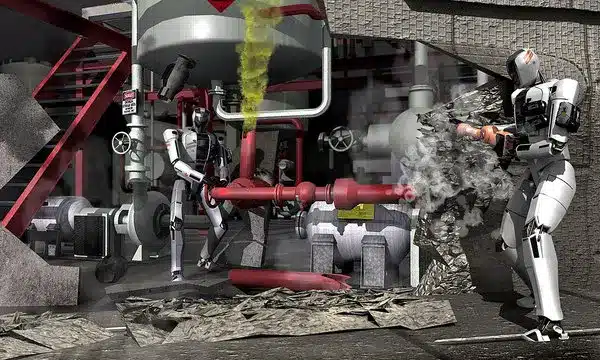
When disasters involve radiation or chemical contamination, robots become essential first responders. Radiation-hardened machines can enter nuclear facilities to assess damage, close valves, and perform repairs in environments that would be lethal to humans. Chemical detection robots identify hazardous substances, map contamination zones, and collect samples for analysis without exposing personnel to toxic materials.
Debris Removal Machines
Heavy-duty robotic excavators and debris handlers accelerate the clearing of collapsed structures. These machines work continuously without fatigue, removing tons of rubble to create access routes for rescue teams. Advanced models use sensors to detect voids that might contain survivors, carefully removing debris without causing further collapses.
Real-World Success Stories 📖
The value of disaster relief robotics is best illustrated through actual deployments that have saved lives and accelerated recovery efforts.
Following the 2015 Nepal earthquake, rescue teams deployed ground robots that located survivors buried beneath collapsed buildings in Kathmandu. These robots identified air pockets where people remained alive days after the quake, guiding human rescuers to successful extractions that wouldn’t have been possible through traditional search methods.
During the 2017 Mexico City earthquake, drone teams mapped thousands of damaged buildings within 48 hours, creating prioritized lists for structural inspections. This rapid assessment prevented additional casualties from aftershock collapses and accelerated the return of residents to safe structures.
Hurricane Maria’s devastation of Puerto Rico in 2017 showcased the potential of drone-delivered aid. While roads remained impassable for weeks, cargo drones delivered critical medical supplies to isolated mountain communities, maintaining healthcare services until ground transportation could be restored.
The 2019 Mozambique floods saw underwater robots mapping submerged areas, identifying safe routes for rescue boats, and locating survivors clinging to rooftops in neighborhoods completely cut off by floodwaters. The intelligence gathered by these machines directed helicopter rescue operations to save hundreds of people.
Challenges and Limitations ⚠️
Despite impressive advances, disaster relief robotics still faces significant challenges. Battery life remains a critical limitation, with most robots operating for only a few hours before requiring recharging or battery swaps. In disaster zones with disrupted power infrastructure, maintaining robot operations becomes logistically complex.
Extreme environmental conditions can overwhelm even ruggedized robotic systems. Intense heat, corrosive chemicals, electromagnetic interference from fires, and physical impacts from debris can disable robots at critical moments. Engineers continually work to improve durability, but the chaotic nature of disasters creates conditions that exceed design specifications.
Communication challenges arise when disasters destroy the infrastructure robots rely on for remote operation. While some autonomous capabilities exist, most disaster relief robots still require human operators who need reliable communication links to control and receive data from their machines.
Cost represents another significant barrier to widespread adoption. Advanced disaster relief robots often cost hundreds of thousands or even millions of dollars, placing them beyond the budgets of many emergency response organizations, particularly in developing nations where natural disasters frequently strike hardest.
The Human-Robot Partnership 🤝
The most effective disaster relief operations leverage the complementary strengths of humans and robots working together. Robots excel at tasks requiring endurance, precision, and operation in hazardous environments. Humans provide judgment, creativity, emotional intelligence, and the ability to adapt to unprecedented situations.
Training programs increasingly focus on human-robot teaming, teaching rescue personnel how to deploy, operate, and maintain robotic systems. Successful integration requires responders who understand both the capabilities and limitations of their robotic partners. The best outcomes occur when human intuition guides robotic capabilities toward the highest-value tasks.
Psychological research has examined how survivors respond to robotic rescuers. Studies show that while people naturally prefer human contact, they readily accept robotic assistance when human help isn’t immediately available. Design teams now incorporate features that make robots less intimidating, including friendly sounds, lights that indicate the machine is working to help, and two-way communication systems that quickly connect survivors with human operators.
🌍 The Future of Disaster Relief Robotics
Emerging technologies promise even more capable disaster relief robots in the coming years. Swarm robotics research explores how large numbers of simple, inexpensive robots could coordinate their actions to accomplish complex tasks. Imagine hundreds of small drones working together to create detailed 3D maps of disaster zones within minutes, or teams of ground robots that cooperatively move heavy debris.
Soft robotics introduces machines made from flexible materials that can squeeze through impossibly tight spaces, conform to irregular surfaces, and interact more safely with survivors. These machines could navigate through rubble with unprecedented mobility, reaching victims in spaces that rigid robots cannot access.
Advanced materials research promises robots with greater environmental resistance, longer operational periods, and self-repair capabilities. Some experimental systems incorporate biological elements, creating hybrid machines that combine the adaptability of living organisms with the precision of mechanical systems.
5G and future communication networks will enable more sophisticated coordination between multiple robots and between robots and human operators. Low-latency, high-bandwidth connections allow real-time control of complex operations and enable cloud-based AI systems to process data from disaster zones instantaneously.
Preparing for Tomorrow’s Disasters Today
Forward-thinking emergency management agencies are integrating robotics into their disaster preparedness plans. This includes maintaining stockpiles of robotic equipment, training personnel in robot operation, and conducting regular exercises that simulate realistic disaster scenarios. International cooperation is expanding, with nations sharing robotic resources and expertise during large-scale disasters that overwhelm local capabilities.
Standardization efforts aim to ensure that robots from different manufacturers can work together seamlessly during disaster responses. Common communication protocols, compatible charging systems, and shared data formats enable more effective multi-agency operations where diverse robotic assets coordinate toward common goals.
Research partnerships between universities, technology companies, and emergency management organizations accelerate innovation while ensuring new technologies meet the practical needs of disaster responders. These collaborations bring together engineers who understand what’s technically possible with first responders who know what’s operationally necessary.
The Lifesaving Promise of Technology 💡
Robotics technology is fundamentally transforming disaster relief from reactive crisis management to proactive lifesaving operations. These machines don’t replace human rescuers but instead amplify their capabilities, enabling them to save more lives while reducing risks to themselves. As technology advances and costs decrease, robotic disaster relief systems will become standard equipment for emergency responders worldwide.
The next major disaster will undoubtedly showcase new robotic capabilities that don’t yet exist, continuing the rapid evolution of this field. What remains constant is the goal: using every available tool, whether human or machine, to save lives when disaster strikes. The revolution in disaster relief robotics represents humanity’s determination to protect itself through innovation, turning our technological achievements toward the most fundamental purpose—preserving human life in the face of nature’s fury.
The partnership between human compassion and robotic capability creates a powerful force for good in our increasingly unpredictable world. As climate change intensifies natural disasters and urban populations grow denser, the need for effective disaster response technologies becomes ever more critical. Robotics offers not just incremental improvements but transformational changes in how we prepare for, respond to, and recover from the catastrophes that will inevitably come.
